

In recent years websites have lost their position as the first place people discover you and the main driver of cold demand.
Instead, social platforms, marketplaces, and local networks have taken over that role.
However, nothing has replaced the crucial functions websites provide and, far from being obsolete, they are as important today as they have always been.
They remain a stable reference point and significant trust anchor for both local consumers and search engines:
- the majority of people still check a business’s website before making a final decision, and
- search engines still use them as the primary source to determine relevance and authority.
For a local service business, a website continues to be a low-cost, high-impact tool that strengthens almost every part of your business, from visibility and trust, to customer experience and sales.
In this post, you’ll find 14 concrete reasons – not theory, not sales talk – that show exactly how a website supports a local business, in ways you can actually see and measure.
So, let’s dive in …
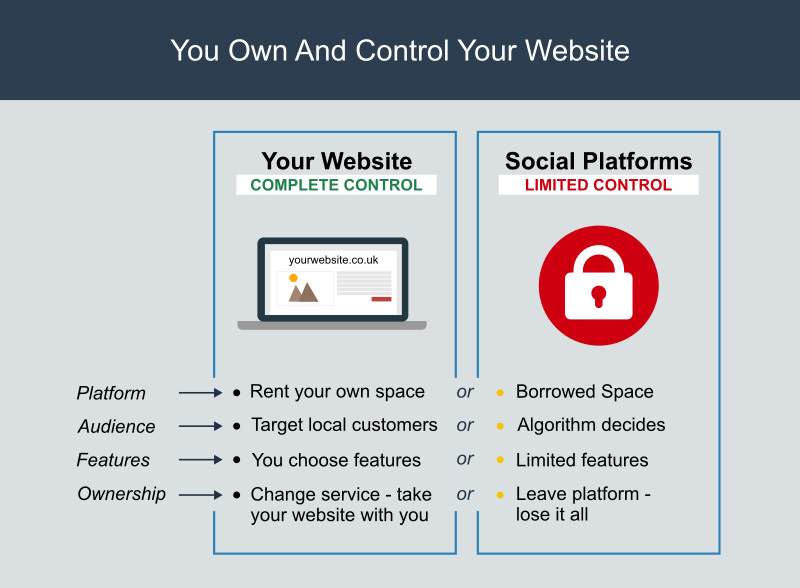
1. Your website is the one part of your digital presence you actually own and control
Relying solely on social media to promote your business is a fragile strategy. On these platforms you are ‘borrowing’ space, and the visibility of your posts is determined by algorithms and policies out of your control.
With a website, however, nobody can shut you out of your own audience.
- You decide how your website works and who runs it.
- You control how local customers find you online, so the right people can reach your business.
- You have the freedom to add anything that helps your customers or makes running your business easier – like a booking tool, contact form, or portfolio.
- If you ever decide a service isn’t right for you, you can switch to another – your website stays yours.
Anything you don’t own can change without warning. With ownership of your domain name and website, you stay in control.
2. A website connects you to everyone, social media is limited
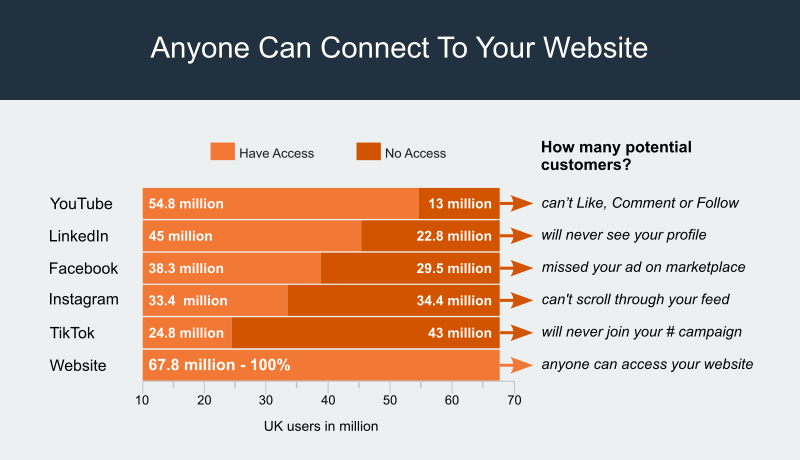
Your website connects your business to anyone searching online, not just social media users.
Even though over 79% of people in the UK have a social media account, millions of local customers don’t, or aren’t active on the platform you’re using.
So, if you’re relying on Instagram to host your portfolio or product gallery, only those with an Instagram account will be able to view it.
As it’s unlikely that people will join Instagram just to see your posts, any of your competitors with a website accessible to everyone, will have the competitive advantage.
Social Media is further limited by who actually sees your posts.
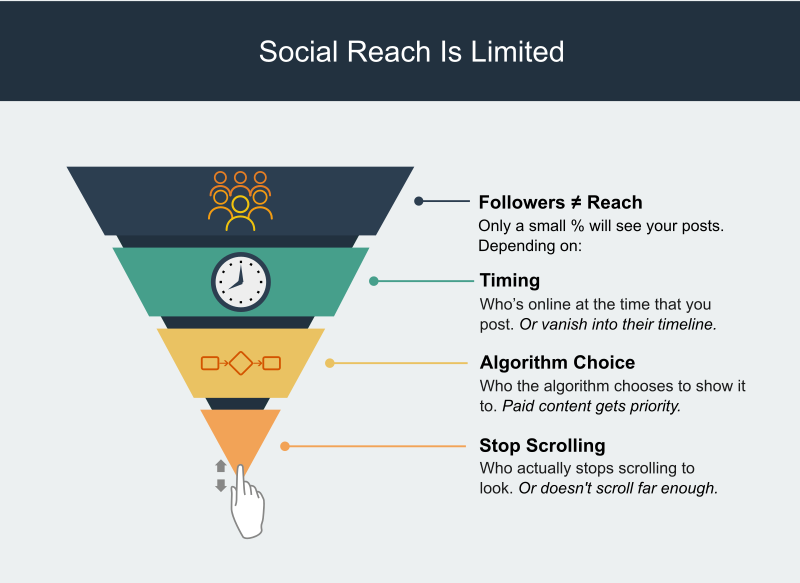
Even those who do follow you on social media, may not see your posts.
Your organic reach rate is the percentage of your followers who actually see your content without paid promotion. The industry average ranges from just 0.15% to 4.20%, depending on the platform and type of content. (source: Organic Reach Benchmarks 2026).
Reach is determined by factors out for your control, including:
- Who’s online at the time that you post,
- who the algorithm chooses to show it to, and,
- who actually stops scrolling to look.
3. Unlike social media – a website compliments search behaviour
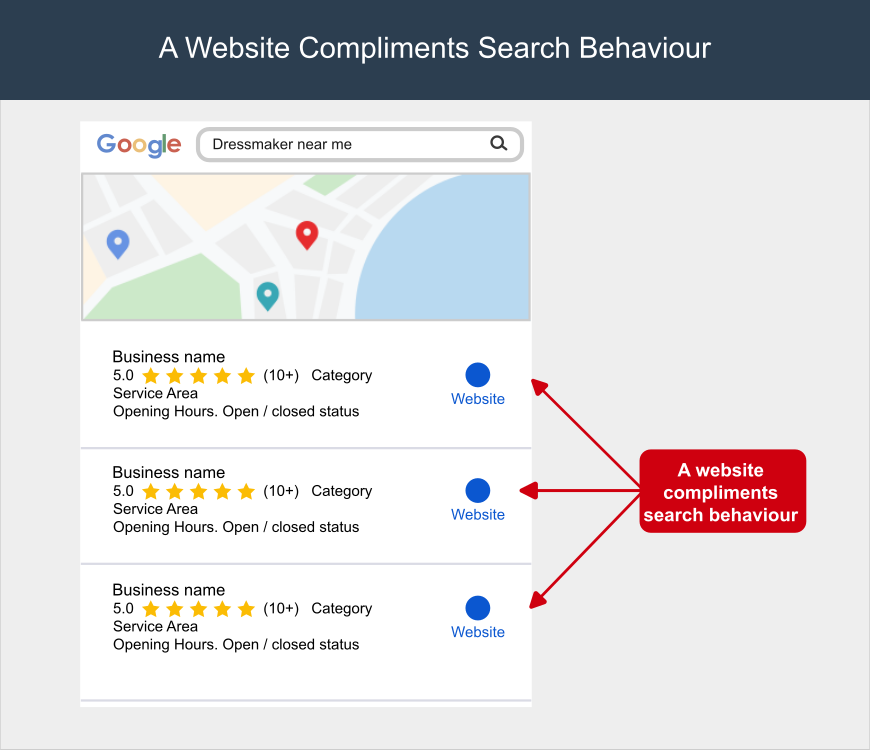
Of course, a website still needs visitors – nothing works by magic – but the way people find websites is very different from how they come across social posts.
- People scroll through social media for entertainment. Social media platforms prioritise paid content.
- People query search engines to find something specific. Search engines favour websites.
The difference matters because people use search engines when they’re actively looking for something.
And, that something might be you.
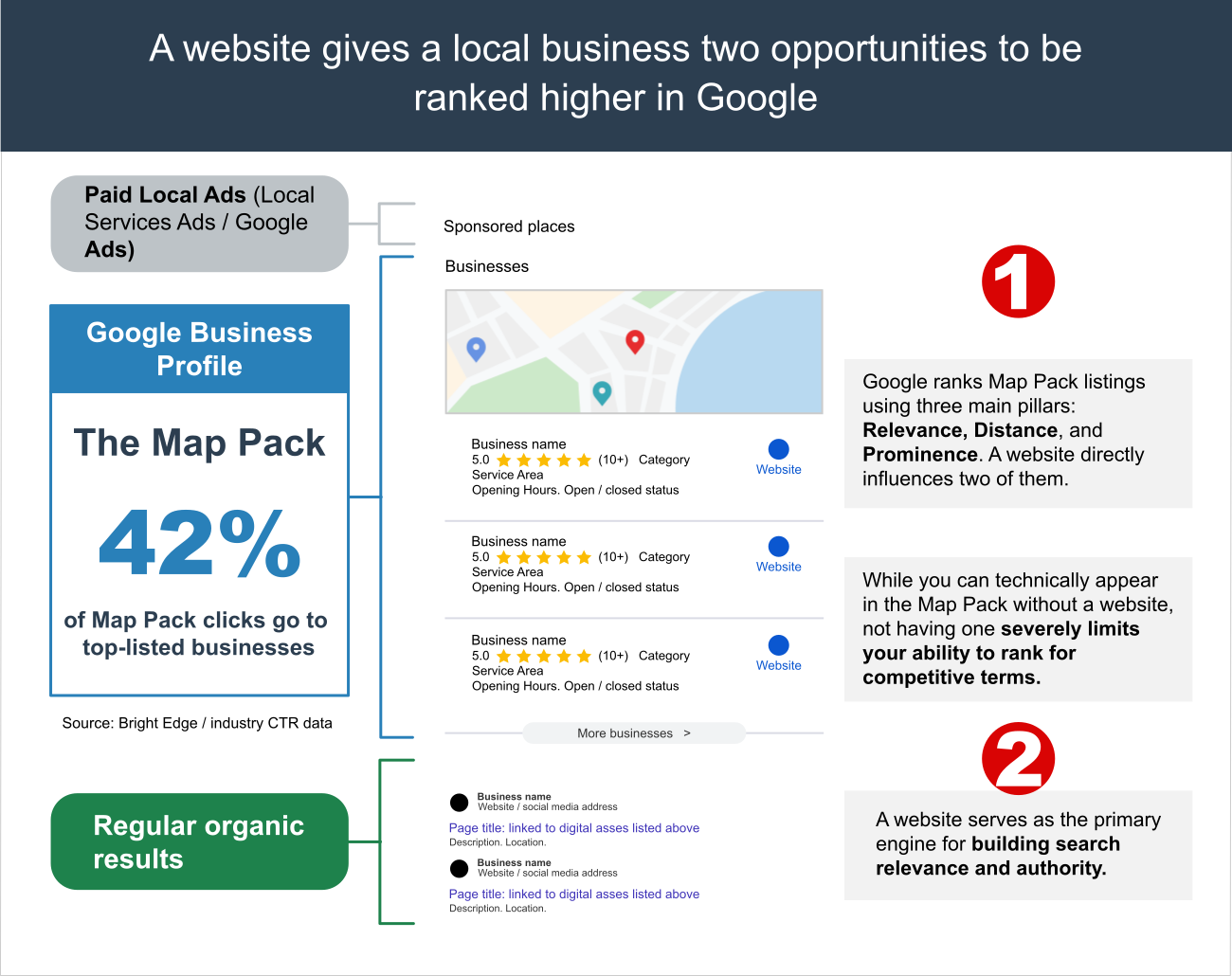
4. A website gives you two opportunities of being ranked high in Google
According to Google Trends, there has been a staggering 900% increase in ‘near me/tonight’ searches in the past two years. (source: 75+ UK Local SEO Statistics for 2026).
That makes ranking in the top results for the Google Map Pack and organic results more than just ‘a great position to aim for’. Positioning in the top three dramatically increases your visibility and could literally make your business.
A website gives you two opportunities to achieve top positioning:
Opportunity 1 – The Map Pack or Local 3-Pack
The Map Pack and Local 3-pack are different names for the same Google Search feature: a block of three local business listings displayed alongside a small map at the top of search results for queries with local intent.
The Google Business Profile (GBP) is king for local exposure and is the single strongest signal for the Map Pack.
Google ranks the Map Pack listings using three main pillars: Relevance, Distance, and Prominence.
While a website doesn’t directly control map rankings, it does influence both the relevance of the search and the prominence of your business. So a strong website helps validate your local authority.
When you consider that 42% of Map Pack clicks go to the top-listed businesses, (source: 75+ UK Local SEO Statistics for 2026), adding a website to your digital assets could be one of the most powerful things you do to increase your potential for local search dominance.
Opportunity 2 – Top organic search results
Despite the increase in social platforms and marketplaces for local promotions, nothing has yet replaced a website as the primary engine for building search relevance and authority.
Individual business websites remain crucial to Google’s accurate ranking ability.
While the Map Pack captures a large share of local searches, dedicated web organic results and directories capture the rest.
5. A website may help you reach a consumers shortlist
If you needed further incentive to achieve top three positioning in Googles Map Pack, consider:
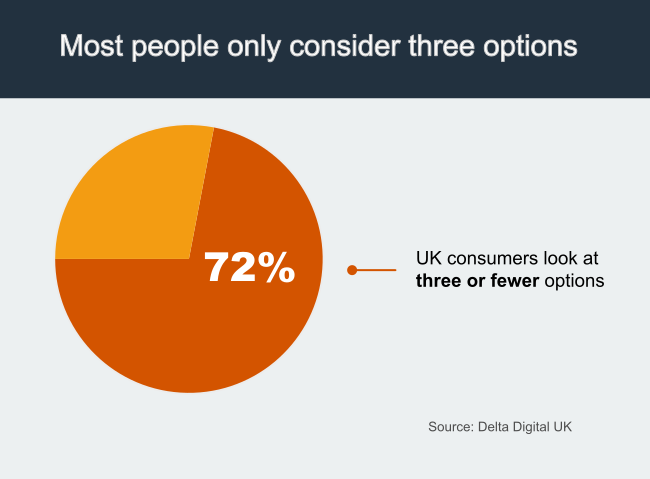
72% of UK consumers look at three or fewer options before deciding which company to buy or book with.
Source: Delta Digital UK
While Google Business Profile or map listing often drives the initial discovery, a business website is where the customer makes the actual decision.
It serves as the primary tool to survive that rapid elimination process – acting as the final credibility filter and validation gate for consumers deciding who to work with.
6. A website is an important element of the decision-making process
It’s important to recognise that being discovered in the search process is only the first part of your journey to being selected.
Once you have been found, you must demonstrate that you are trusted, provide basic transparent information and more than one path for consumers to explore your business further.
For the majority of local search, a website is an important element of the decision-making process.
The following statistics demonstrate how consumers behave after they have found the local results they’re looking for. Although these figures are from a US survey, it is expected that a similar pattern is seen among UK consumers.
| Consumer Behaviour | Last reported figure | What it suggests |
|---|---|---|
| Read business reviews after a local search often or always | 67% | Reviews contribute to the decision |
| Consider contact information and opening hours important | 85% | Basic, accurate information is essential |
| Continue researching after reading positive reviews | 66% | A good reputation may not be enough |
| Visit the business website after reading positive reviews | 54% | A website can provide the next layer of reassurance |
Source: BrightLocal, 2026 Consumer Search Behaviour. Local search statistics
7. A website increases trust
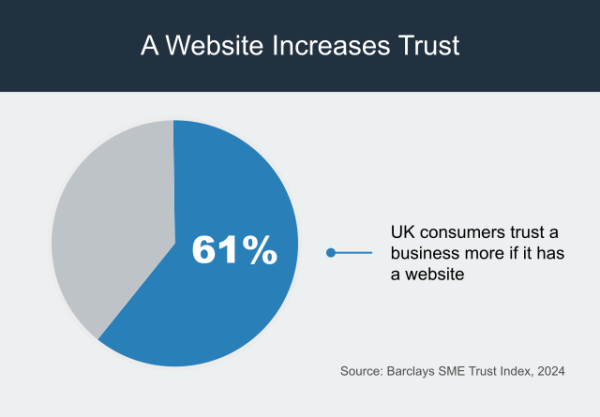
“The majority of UK consumers, 61%, say they trust a business more if it has its own website in addition to social media”, (Barclays SME Trust Index, 2024).
That single statistic says a lot about what we all expect from businesses today.
It isn’t talking about the quality of a website, or its content. It just states that the majority of us will trust your business more, if you have one.
Having a website isn’t just about selling online – it’s about showing that your business is real, reliable, and ready for customers.
8. Your competitors are getting websites at an extraordinary rate
Up until 2025, sole traders were lagging behind in website adoption across all UK business sectors.
The UK Government’s latest UK Business Data Survey 2026, however, found that website ownership rose from 68% of businesses in 2023–24 to 78% in 2025–26.
Among sole traders, it rose from 65% to 76%.
Let that sink in… for years the smallest of businesses have been slow to adopt websites, but in the past 12 months the amount of sole traders getting one has increased by 11%.
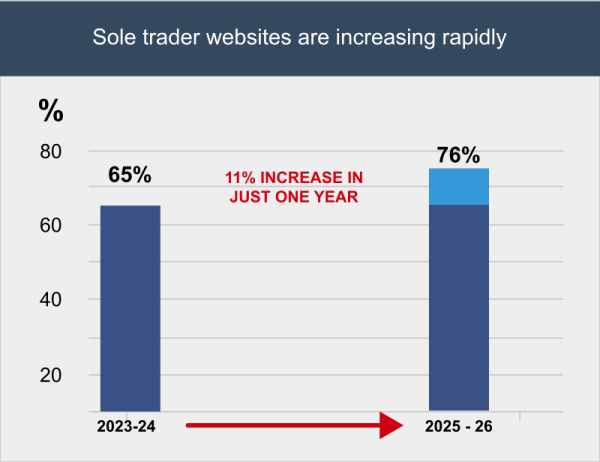
This increase doesn’t suggest changes in user behaviour, rather that your competitors are recognising the need to maximise their digital presence.
9. A website lasts years and is resilient to shifting trends
If your entire business profile exists only on social media, what happens if you suddenly lose access to that account?
All your unique content is gone. Your audience disappears. The story of your journey, your successes, and your milestones is forgotten.
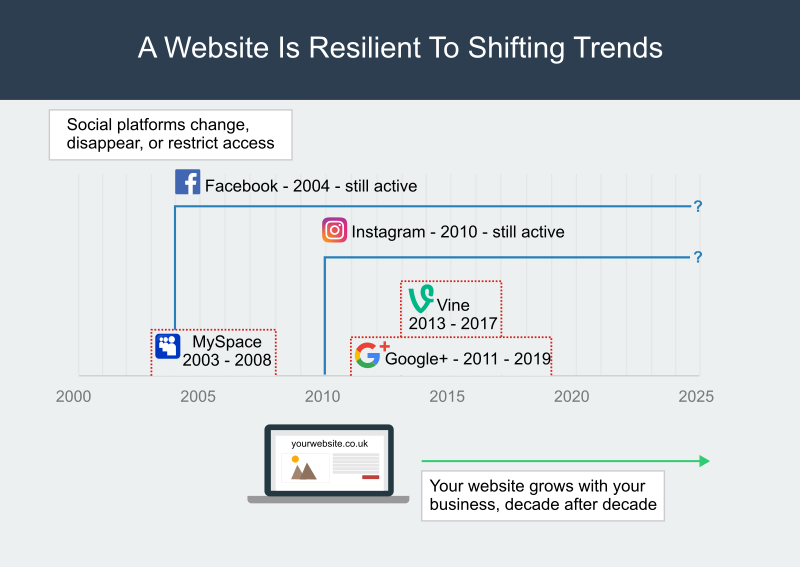
Social media platforms come and go – remember Vine, MySpace, or Google+? Algorithms change, accounts can be restricted or shut down, and security breaches can wipe content without warning.
But a well-maintained website is yours to control, and can serve your business for years or even decades.
Instead of a vanishing timeline on borrowed space, your website documents a lasting history, showcases your growth, and provides a stable foundation for everything your business does online.
10. A website enables you to choose the right content to connect with your customers
Every piece of content you create to promote your business – from a business card or flyer, to a social media post or website page – supports specific business objectives.
For simplicity, we can group content into six functional categories:
- Sales Support → Content that helps you sell.
- Trust & Credibility → Content that makes you look reliable.
- Social Proof → Content that shows others trust you.
- Attract & Engage → Content that gets people interested and talking.
- Retention & Customer Success → Content that keeps customers happy and coming back.
- Business Support → Content that helps you work smarter behind the scenes.
Most content serves multiple purposes
Most content types contribute to more than one category, with varying levels of impact. For example, on a scale where:
- 3 = Strong Effect
- 2 = Moderate Effect
- 1 = Weak/Supportive
A ‘frequently asked question’ (FAQ) page is useful in four categories:
- Sales Support = 2
- Trust & Credibility = 3
- Attract & Engage = 2
- Retention & Customer Success = 3
This gives a FAQ page a Total Impact Score of 10.
Whereas a blog post, useful across three categories, has a Total Impact Score of 7.
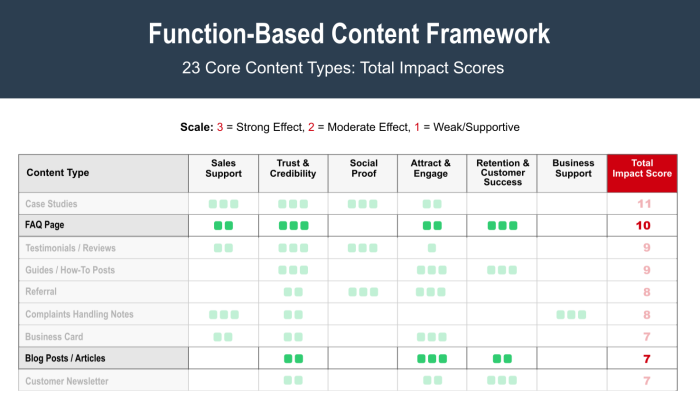
Excerpt from Function-Based Content Framework, 23 Core Content Types.
A website brings all content together
While individual promotional materials perform different functions, a website is where you bring it all together. With no limit on the quantity, or format of content you can include: video, blog posts, images, infographics, podcast, or webinars – anything is possible.
From your website menu, visitors can clearly see content that helps sell your products/services, builds trust and credibility, and attracts and engages potential customers.
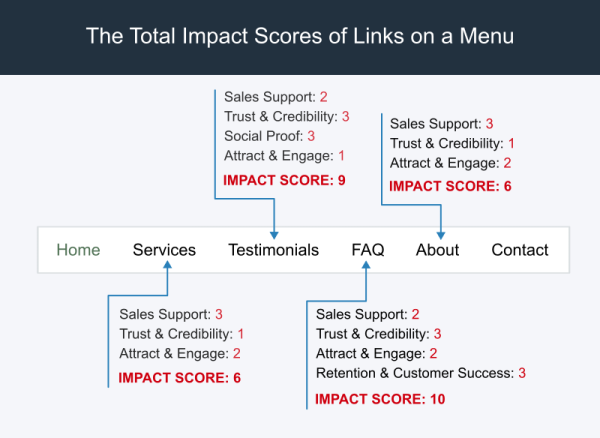
Over time, your site can feature content serving all six functions, increasing its value to your business.
Find out more about Function-based content.
11. A website is your central hub for all promotional activities
A website serves as an anchor point for everything you do to promote your business – linking your social media, email campaigns, online ads, and offline promotions.
Instead of potential customers viewing a single isolated promotion, a link to your website is an invitation to learn more about you.
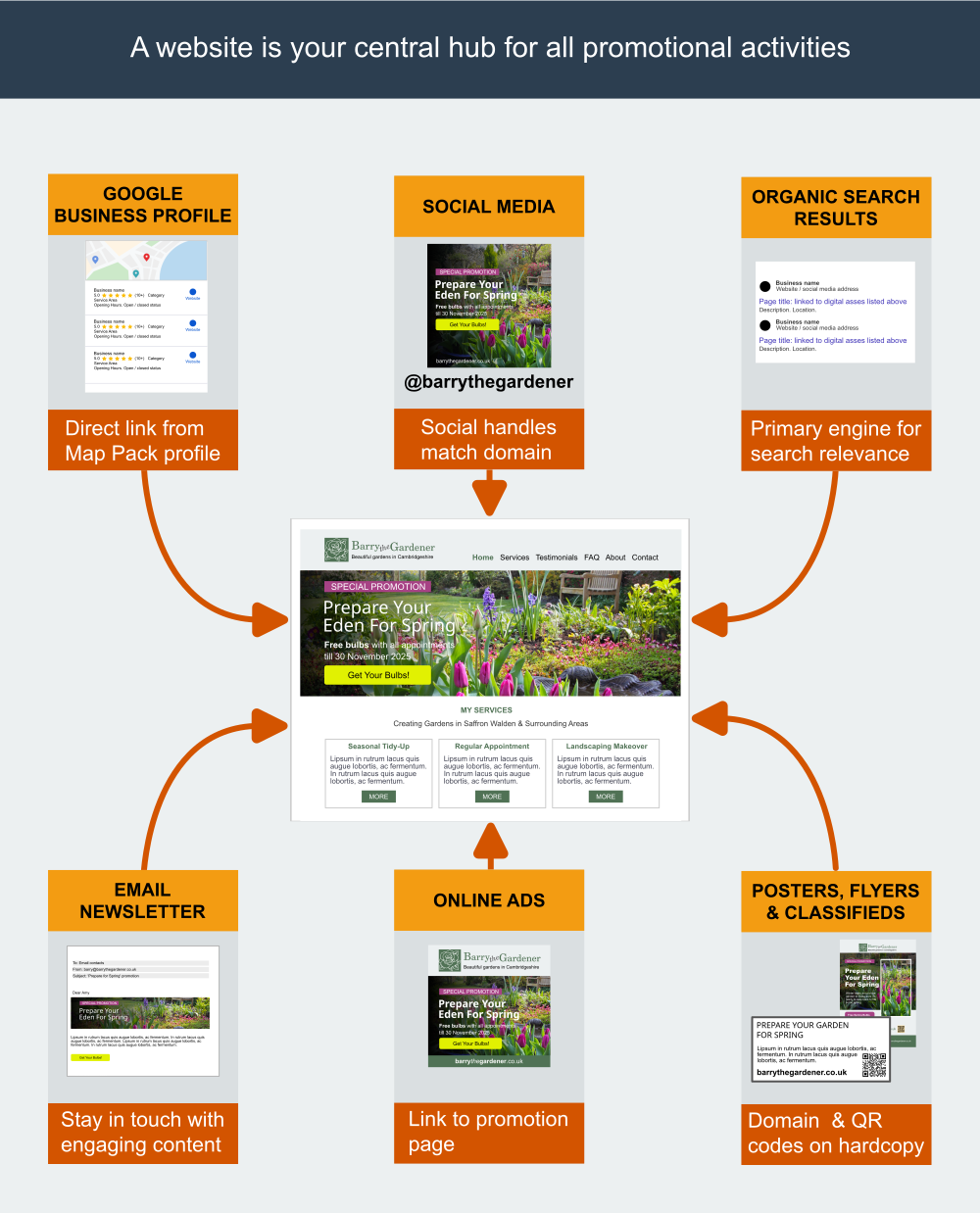
Once they arrive, visitors can explore your history, portfolio, FAQ, and testimonials from satisfied customers, gaining a deeper understanding of who you are and what you offer.
12. A website offers multiple points of contact
Research shows that 85% of consumers consider clear contact details and opening hours essential when researching a local business (source).
The easier you make it for people to reach you, the more enquiries you’re likely to receive – and a website gives you full control over how those options are presented.
Visitors instinctively know to look for a Contact link in a website menu, and they expect to find a simple way to get in touch at the other end. Email remains one of the most widely used and preferred communication methods, along with phone calls and SMS messaging.
Your website can also link to your social media profiles, display a map for customers who need to visit your location, and even include optional tools like live chat – giving people the ability to message you instantly if you’re available.
Even a limited NAP (Name, Address, Phone number) adds credibility and provides an additional contact route.
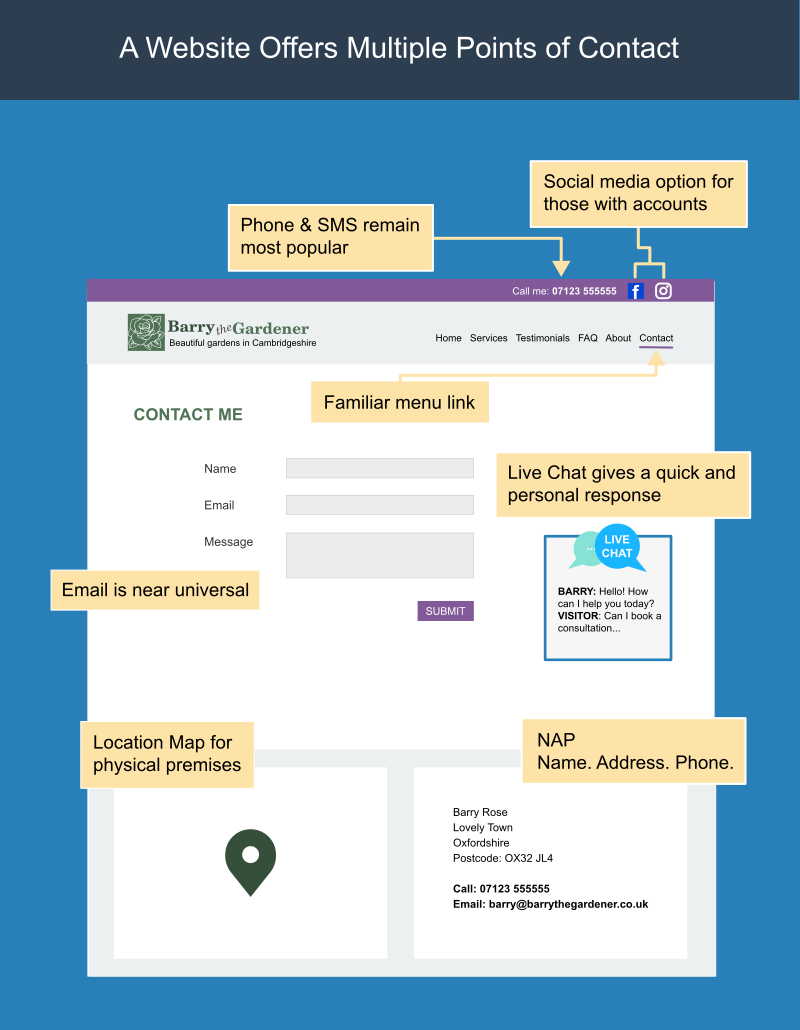
The key is balance: offer multiple ways to reach you, but only the channels you can realistically manage without becoming overwhelmed.
13. A website helps you understand your customers better
One of the most overlooked parts of marketing is analysing how people respond to your promotions – yet this insight is essential if you want to develop more effective campaigns.
There’s a tendency to celebrate the positive outcome (a new customer) without looking deeper:
How many people engaged but didn’t get in touch? Which message worked? Which didn’t?
Even simple steps, such as asking new customers “How did you hear about me?”, are often missed.
And without basic tracking – how many people saw a promotion versus how many responded – it’s hard to know whether your time or money was well spent.
Your website changes that.
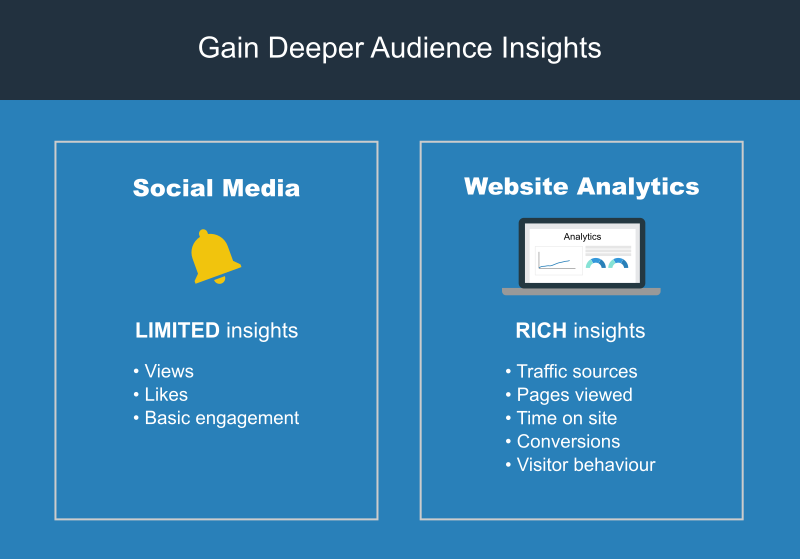
As the central hub for all of your marketing, it allows you to use free tools called ‘analytics’ to gather rich data you simply can’t get from social platforms alone:
- Which pages people visited
- How long they stayed
- What actions they took
- Where visitors came from
- Basic demographic or device information
This kind of insight is invaluable. It helps you understand your audience, refine your messaging, and create promotional strategies that attract more engagement – and ultimately, more customers.
14. Digital payment options on a website provide competitive advantages
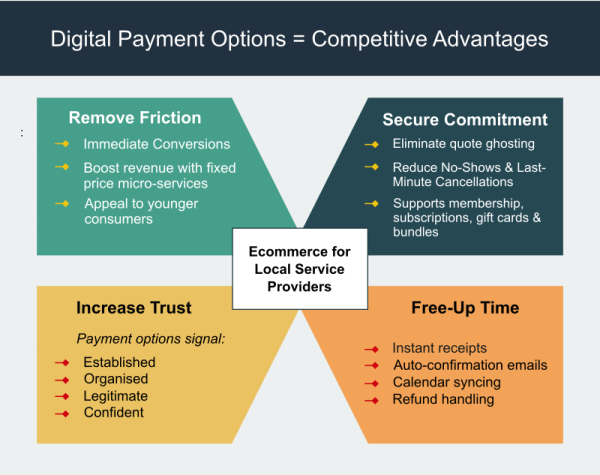
As a local, in-person service provider, offering on-site digital payment options, in addition to cash payments, can give you competitive advantages that directly impact enquiries, conversions, and customer satisfaction.
Adding ecommerce to your website isn’t about “becoming an online shop.” It’s about:
- Removing friction – Make payment easier by offering different options. Engage visitors while their motivation is high, instead of hoping they’ll come back later.
- Securing commitment – Charge deposits for appointment services, sell gift cards or service bundles, and secure early commitment.
- Increasing trust – Signal that you are organised, legitimate and confident with your services.
- Free up your time – Automate routine tasks like confirmation emails and receipts.
The core service for accepting online payments.
All digital payment options – from online forms and buy-now buttons to Apple Pay or Google Pay – are mostly built on the same underlying card systems. They are simply different ways of processing a secure electronic transaction between your customer and your business.
Payment processors like Stripe, PayPal, and Square offer services enabling secure card checkout through multiple methods, including on your website.
Stripe is by far the cheapest option, offering a low-cost, pay-as-you-go pricing structure, with no setup or monthly costs. You just pay the transaction fees (1.5% + 20p for standard UK cards).
Adding digital payment options not only adds convenience for customers, it also helps you with fewer missed opportunities (people can book/pay anytime), reduced admin, and a better customer experience.
Related post: 9 Benefits To Accepting Digital Payments
Conclusion
Far from being an obsolete tool from history, a website remains one of the most important digital assets a business can own.
They are still relied on by both consumers and search engines to provide the information, clarification and trust needed to help people make an informed choice.
And, with an 11% increase in the amount of sole trader websites set up in the past year, their importance among your competitors is being increasingly recognised.